



Most homeowners don’t struggle with design because they lack taste.
They struggle because they’re making thoughtful decisions in isolation.
A sofa chosen one month.
A rug chosen six months later.
Paint selected under pressure because the painter is waiting.
Individually, these are good decisions. But together? The home starts to feel disconnected. Not chaotic — just unsettled. Like every room is telling a slightly different story.
I hear this often from Tampa homeowners during consultations:
“Each room looks nice… but the house doesn’t flow.”
That feeling is the absence of cohesion — and it’s far more common than you think.
What Cohesion Really Means (And What It Doesn’t)
Let’s clear this up early, because this is where many people get stuck.
A cohesive home does not mean:
- Everything matches
- Every room uses the same color
- Your home feels safe, neutral, or boring
True cohesion is about connection — visual, emotional, and functional.
Design publications like Elle Decor’s guidance on home flow often point out that the most successful interiors are the ones that move you gently from space to space without visual friction.
That’s the goal.
Step 1: Start With a Whole-Home Vision (Before Choosing Anything Else)
This is where most DIY design journeys quietly unravel.
Homeowners often begin with things — furniture, finishes, colors — instead of beginning with how they want the home to feel as a whole.
Before I design a single room, I establish:
- The emotional tone of the home (calm, elevated, grounded, airy)
- The architectural direction (modern, transitional, organic, coastal)
- How the home needs to function for daily life
This big-picture thinking is exactly what my Full-Service Interior Design Service is about
it built around — especially for open-concept Tampa homes where every space is visible from the next.
When the vision is clear, every future decision becomes easier.
Step 2: Create a Color Story That Evolves (Not Repeats)
One of the biggest misconceptions about cohesion is that colors must be repeated exactly from room to room.
In reality, cohesive homes echo color rather than copy it.
That might mean:
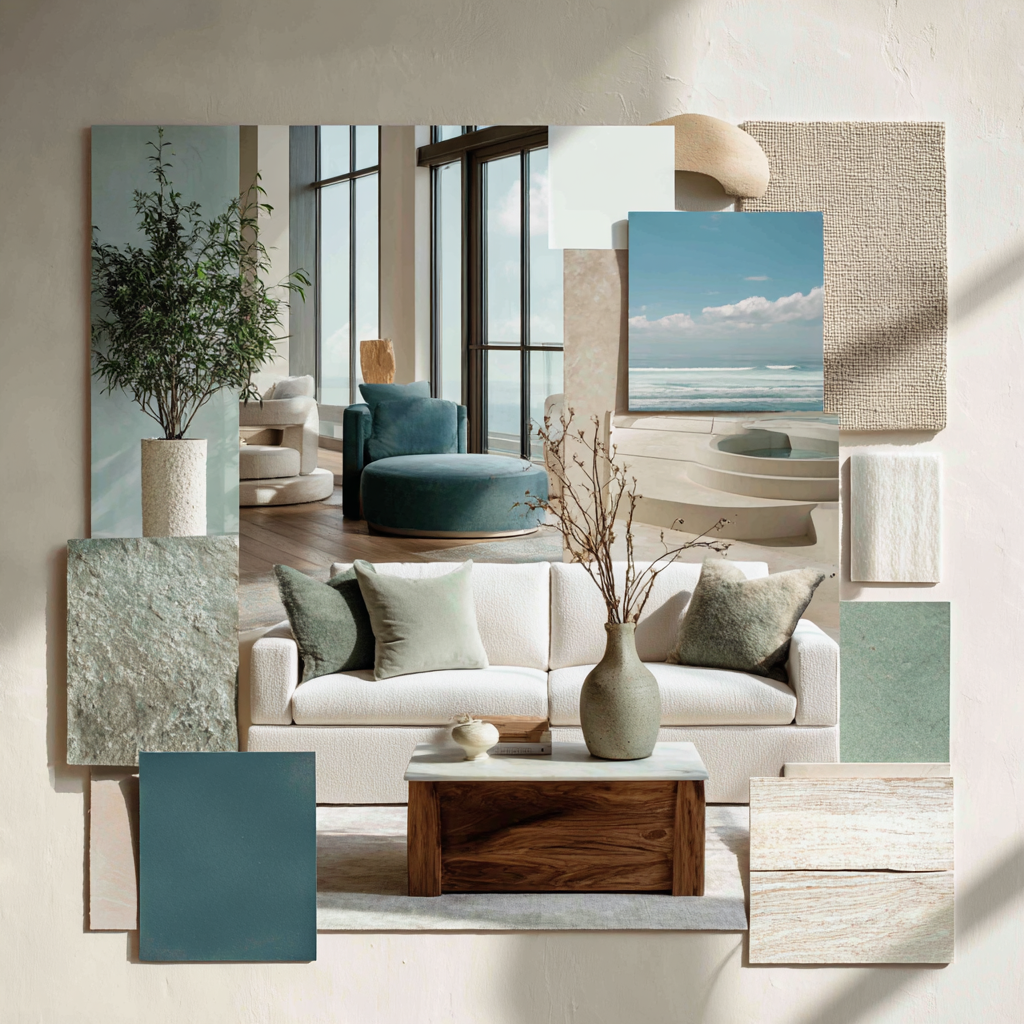
- A warm neutral foundation throughout the home
- Shared undertones across paint, upholstery, and finishes
- Accent colors that appear in different intensities as you move through the space
Florida light adds another layer of complexity. Our bright sun can shift colors dramatically throughout the day, which is why selecting the right neutrals matters so much.
I walk through this in detail in Paint It Right: Designer-Approved Neutrals for Florida Homes
if you’d like to explore color cohesion further.
Step 3: Repeat Materials to Create Subconscious Harmony
This is one of the quietest — and most powerful — tools in cohesive design.
When certain materials repeat throughout a home, the brain registers order and balance without you consciously noticing it.
For example:
- The same wood tone appearing in flooring, furniture, and cabinetry
- A consistent metal finish echoed in lighting and hardware
- Similar textures (linen, stone, wool) used in different forms
This is why modern-transitional interiors feel so timeless. They rely on material harmony rather than trend-heavy statements.
Step 4: Let Lighting Be the Unifying Thread
Lighting is often chosen last — and that’s where cohesion breaks down.
In well-designed homes, lighting is planned early:
- Consistent color temperature throughout the home
- Finishes that relate from space to space
- A balance of statement fixtures and supporting ambient light
If you’re curious about the technical side of layered lighting,
I am working on a lighting planning guide and will be publishing it soon for my newsletter subscribers. (Subscribe here to receive goodies!)
During my
Interior Design Consultation lighting is one of the first things we map out — because when lighting works, everything else feels better.
Step 5: Allow Each Room to Have One Intentional Moment
Cohesion doesn’t mean restraint everywhere.
In fact, the most memorable homes have intentional highlights:
- A sculptural chandelier in the dining room
- A textured wall or wallpaper in a powder room
- A dramatic headboard or accent in the primary bedroom
The key is knowing where to create impact — and where to let the home breathe.
This clarity is something we establish during
Design Day so homeowners feel confident making bold choices without overwhelming the home.
Step 6: Think About How the Home Feels to Live In
Cohesion isn’t just visual — it’s experiential.
Ask yourself:
- Does the home feel easy to move through?
- Do transitions between rooms feel natural?
- Does each space support how you actually live?
When cohesion is missing, homeowners often feel it emotionally first — before they can articulate what’s wrong.
I explore this idea more deeply in
7 Common Interior Design Mistakes That Sneak Up on Homeowners where we talk about how subtle design missteps affect comfort, mood, and daily life.
Want a Cohesive Home Without the Overwhelm?
Whether you’re furnishing a new build, refreshing a long-loved home, or trying to bring order to years of piecemeal decisions, you don’t have to figure it out alone.
Through my Full-Service Interior Design, Design Day, or Design Consultation, I help Tampa homeowners create homes that feel connected, calm, and beautifully intentional — from blueprint to bliss.
Because when your home flows, life does too.